What Does Auld Lang Syne Mean: Language, Translation & History
What does Auld Lang Syne mean? Get a plain-English meaning, Scots vs Gaelic clarified, and a short history from Burns to the New Year’s Eve tradition.
Author:Callum FraserJan 08, 202636.6K Shares853K Views
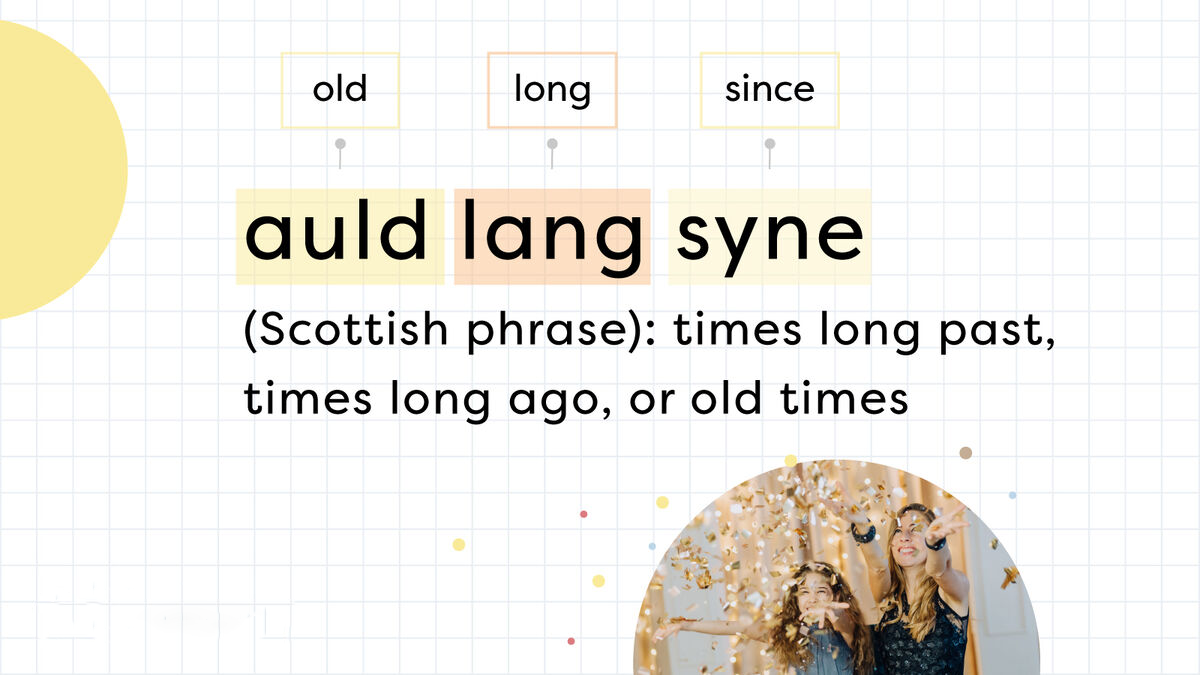
Auld Lang Syne - Literal Words Vs Real Meaning
If you’ve ever mumbled your way through the tune at midnight, you’re not alone-most people recognize the melody long before they understand the words. Here you’ll get the translation, the emotional meaning, and a “plain-English” version you can actually say with confidence.
The short truth: this isn’t a mysterious New Year spell. It’s a warm, reflective toast to old friends and shared time-and that’s why it lands so powerfully when a year ends.
Quick Answers
- “Auld lang syne”is Scots for “old long since,”meaning “times gone by.”
- Idiomatically, it means “for old times’ sake.”
- The song’s core idea is not forgetting old friendsand sharing goodwill(often pictured as a friendly toast).
- We sing it at New Year because it fits the moment: closing one chapter, opening another.
One-sentence Meaning In Modern English
It means:
“Let’s remember the friends and moments that brought us here, and raise a simple toast to goodwill as we move forward.”
If you want a natural line to say at midnight:
“Here’s to old friends, shared memories, and the good we’ll carry into the year ahead.”
That captures the song’s purpose-memory plus kindness-without needing to translate Scots on the spot.
Literal Translation Vs Idiomatic Meaning
This is where many explanations go wrong: they give the literal words and stop there.
- Literal:“old long since” (a time phrase pointing backward).
- Idiomatic:“for old times’ sake” (a feeling phrase: remembering, honoring, toasting).
A useful way to hold both meanings in your head is this: literal tells you the direction (back), idiomatic tells you the intent (cherish).
Now that you’ve got the “what” and the “why,” the next step is decoding the key Scots words so the phrase stops feeling opaque.
The Literal Meaning: “auld” + “lang” + “syne”
Here you’ll learn how the phrase is constructed-and why it lands so powerfully in English even though it’s Scots. Once you understand the three building blocks, the whole song becomes much easier to “hear.”
At its simplest:
- auld= old
- lang= long
- syne= since / ago / then (context-dependent)
What “syne” Means
“Syne” is the pivot word. It’s a flexible Scots time-word that can mean “since,” “before now,” “ago,” “afterwards,” or “then,” depending on context.
That flexibility is why “auld lang syne” can reasonably be explained as:
- “long ago,”
- “times long past,” or
- “for the sake of old times.”
Mini-glossary Of Common Words You Hear In The Chorus
This isn’t a lyric sheet-just a clarity table for the words that trip people up most.
| Scots word/phrase | Plain-English meaning |
| auld | old |
| lang | long |
| syne | since, ago, then (time marker) |
| auld acquaintance | old friends / long-time companions |
| cup of kindness | a friendly toast; goodwill shared |
With the literal mechanics clear, the biggest remaining confusion is language-so let’s settle the Scots vs Gaelic question cleanly.
What Language Is “Auld Lang Syne” - And Is It Gaelic?
In this section you’ll be able to name the language accurately (and explain it kindly when someone gets it wrong). That’s part of treating Scottish culturewith respect: precision is a form of courtesy.
Scots Vs Scottish Gaelic
A common mistake I see every December is people calling it “Gaelic” because it’s Scottish. Scotland has more than one language tradition, and they’re not interchangeable.
- Scotsis a West Germaniclanguage, closely related to English.
- Scottish Gaelic languageis a Celticlanguage (a different family altogether).
So the most accurate, simplest line is: “Auld Lang Syne is Scots, not Gaelic.”
Now that the words are grounded, we can talk about the heart of it-the message people feel even when they don’t know the language.
What The Song Is Really About Beyond Translation
This section gives you the “human meaning” that translations often miss: what the song is doing emotionally, and why it reliably hits people at life’s turning points.
In short, it’s about old friends, shared experiences, and a moment of goodwill - a ritual of remembering and reconnecting.
Friendship, Shared History, And The “cup Of Kindness” Idea
The enduring power of the song is that it doesn’t demand grand speeches. It gives you a simple ritual:
- remember,
- reconnect(even silently),
- offer goodwill(the “cup” image).
That’s why it works whether you’re surrounded by friends or standing in a crowd of strangers: the meaning is broad enough to include anyone you’ve shared time with.
Farewell Vs Reunion-why Both Interpretations Show Up
You’ll hear people call it a farewellsong, and they’re not wrong-culturally it’s used to close things (years, events, ceremonies).
But emotionally, it can also feel like a reunionsong because the act of singing is itself a moment of reconnection: “we’re here together, and we remember.”
If the message is about marking transitions with memory and goodwill, New Year’s is the most obvious stage-so next is how Hogmanay made it a tradition.
Why We Sing It At New Year And What Hogmanay Adds
Here you’ll learn why this particular song became the default for midnight-and what Scotland’s Hogmanay customscontribute to how it’s performed and felt.
The lyrics don’t explicitly mention the new year, yet the song became strongly associated with New Year’s Eve because the emotional logic fits perfectly: reflection, closure, and a shared step into what comes next.
How It Became The “year-turn” Song
New Year rituals do two things at once: they closeand begin. “Auld Lang Syne” fits because it:
- looks back without bitterness,
- honors relationships without demanding sentimentality,
- and ends on a shared act (singing together).
The Hogmanay Circle Tradition
A widely recognized Scottish practice is to sing it in a group, often in a circle, emphasizing connection at the year’s turning point. (Details vary by place and family-which is exactly how living traditions behave.)
To understand how a Scots song became a global New Yearstandard, it helps to see the key historical milestones in under a minute.
Brief History
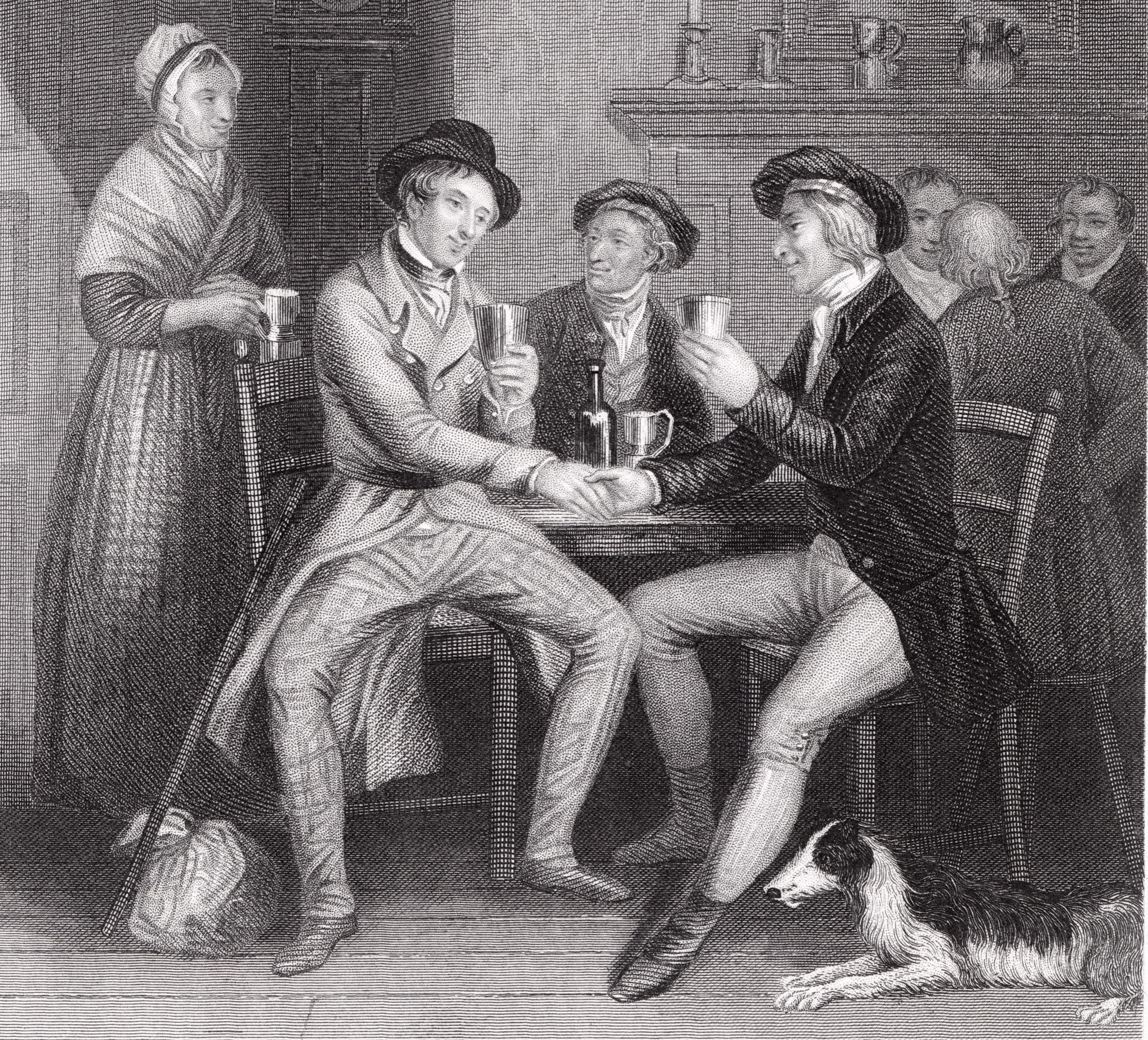
This section gives you the essential backstory-just enough to understand how a Scots phrase from the 1700s became the world’s go-to song for endings and fresh starts.
Quick Timeline (for Skimmers)
- 1788:Burns writes the words down from older tradition.
- 1796:The words appear in print (with a different tune).
- 1799:The familiar tune pairing becomes established.
- 1900s:Broadcast New Year performances help spread the custom widely.
1788: It’s Written Down From Older Tradition
Robert Burnswrote down the words in 1788 and treated the song as something he was recording from older tradition, rather than inventing from scratch. That matters because it explains why the language can feel “older” to modern ears-and why the song carries the weight of folk memory, designed to hold meaning across generations.
1796: First Publication Helps It Travel
The words were published after Burns’ death in 1796, which is when the song starts to move beyond local circles and into wider public life. Importantly, the earliest printed versions were not always paired with the tune most people recognize today-so at this stage, the message is spreading, but the musical “identity” is still settling.
1799: The Familiar Tune Pairing “locks In”
By 1799, the lyrics are published with the tune that became standard for most singers.
That pairing is a big reason the song endures: one set of words attached to one familiar melody makes it easy to learn, repeat, and pass along—exactly how traditional Scottish musictravels.
1900s: Broadcasts Turn Tradition Into Habit
In the 1900s, repeated New Year performances on radio and television helped cement “Auld Lang Syne” as the default soundtrack for midnight in many English-speaking places. Once audiences heard the same song at the same moment year after year, the association became automatic-those first notes started to function like a cultural cue that the year is turning.
Takeaway:The song didn’t become a New Year anthem because it says “Happy New Year”-it became one because its message is built for endings.
Common Misconceptions And Quick Corrections
This section is your “confidence layer”-the quick fixes that prevent the two biggest errors: mislabeling the language and misunderstanding when the song is used.
“It’s Gaelic”
Quick correction:The lyrics are in Scots, not Gaelic. If someone wants one more line: Scots is Germanic (like English); Gaelic is Celtic.
“It’s Only A New Year Song”
Quick correction:While it’s traditionally sung at midnight to farewell the old year, it’s also used at graduations, funerals, and other endings as a general parting song.
Misconception quick-check panel
- If you hear “Gaelic,” the safe response is “Scots.”
- If you hear “only New Year,” the safe response is “any major farewell.”
- If you hear “it’s about the new year,” the safe response is “it’s about people and memory, which fits New Year.”
Now let’s answer the exact questions people type (and ask out loud) every December, as clearly and quotably as possible.
Frequently Asked Questions
What Does “auld Lang Syne” Literally Mean?
It literally means “old long since” - a Scots way of pointing to a time long ago, like “times gone by.”
What Does “auld Lang Syne” Mean In English?
In idiomatic English, it’s “for old times’ sake” - a nod to shared memories and enduring friendship.
Is “Auld Lang Syne” Gaelic?
No. The text is in Scots, and Scots is distinct from Scottish Gaelic.
What Does The Scottish Word “syne” Mean?
“Syne” is a Scots time-word meaning “since,” “ago,” or “then,”depending on context.
Why Do We Sing “Auld Lang Syne” At New Year’s?
Because it’s a reflective “year-turn” song-remembering friendships and sharing goodwill as a new year begins, even though the lyrics don’t mention New Year directly.
Who Wrote “Auld Lang Syne”?
The words are widely attributed to Robert Burns, who wrote it down in 1788and indicated it came from older song material.
Is The Song About Saying Goodbye-or Reunion?
Both. It’s used to mark farewells, but its emotional center is renewing connection-remembering old friends and sharing a “cup of kindness.”
What Is The Song Actually About?
It’s about not forgetting old friends, honoring shared experiences, and marking transitions with warmth and goodwill.
What Does “auld Acquaintance” Mean?
It means old friends or long-time companions-people you’ve known for a long time and still want to honor.
What Does “cup Of Kindness” Mean?
It’s an image of a toast-sharing a drink as a symbol of goodwill and friendship.
Is “Auld Lang Syne” A Christmas Song?
No. It’s primarily associated with New Year/Hogmanay, not Christmas.
Why Do People Only Know The First Verse?
Because many traditions sing only the opening verse and the repeating chorus, so the later verses simply aren’t heard as often.
How Is “Auld Lang Syne” Pronounced?
Most English speakers say “awld lang syne,”with “syne” rhyming with “sign.”
Why Is It Sung At Graduations And Funerals Too?
It’s a general “endings and beginnings” song-used whenever people mark a closing chapter and reflect on shared memories.
What’s The Simplest One-sentence Meaning?
“Let’s honor old friendships and shared times, and move forward with goodwill.”
Final Words
If you came here for the translation, you now have it: “auld lang syne”literally means “old long since,”and idiomatically means “for old times’ sake.”If you came here for the deeper meaning, you have that too: it’s a small, durable ritual for honoring old friends and carrying goodwill into what comes next.
A subtle way to share the tradition-especially if you’re not confident with Scots-is to treat it like a toast: name the friendship, name the memory, and end with kindness. That’s the spirit the song has carried into the wider world.
If this helped, pass it along before the next New Year’s countdown-someone in your group will be grateful to finally know what they’re singing.
Jump to
Auld Lang Syne - Literal Words Vs Real Meaning
Quick Answers
The Literal Meaning: “auld” + “lang” + “syne”
What Language Is “Auld Lang Syne” - And Is It Gaelic?
What The Song Is Really About Beyond Translation
Why We Sing It At New Year And What Hogmanay Adds
Brief History
Common Misconceptions And Quick Corrections
Frequently Asked Questions
Final Words
Callum Fraser
Author
Callum Fraser isn't just a writer about Scotland; he's a product of its rugged landscape and rich history. Born and raised in Perthshire, with the Highlands as his backyard, his love for the nation's stories was kindled by local storytellers and long walks through ancient glens.
This passion led him to pursue a degree in Scottish History from the University of Edinburgh. For over 15 years, Callum has dedicated himself to exploring and documenting his homeland, fusing his academic knowledge with essential, on-the-ground experience gained from charting road trips through the Cairngorms, hiking the misty Cuillins of Skye, and uncovering the secrets of traditional recipes in his family's kitchen.
As the Editor-in-Chief and Lead Author for Scotland's Enchanting Kingdom, Callum's mission is simple: to be your most trusted guide. He combines meticulous research with a storyteller's heart to help you discover the authentic magic of Scotland — from its best-kept travel secrets to its most cherished traditional recipes.
Latest Articles
Popular Articles